
"Before examining table layouts or welcome offers, always inspect the fine print and statutory framework. Real value in online blackjack comes from clear payout terms, verified game rules, and strict personal session limits, not promotional headlines." Claire Bennett, Senior iGaming Content Editor (fictional editorial persona)
Table of Content
- What is Online Blackjack and How the Game Works
- Beginner's Guide to Online Blackjack Rules
- Online Blackjack Formats: Demo, Classic RNG, and Live Dealer
- Basic Blackjack Strategy: Mathematical Decision Matrix
- How to Evaluate Blackjack Online Casinos and Offers
- Blackjack Real Money: Bets, Payments and a Responsible Approach
- FAQ: Common Questions About Blackjack Online
Online Blackjack Guide 2026: Rules, Free Demo Games, Live Dealer & Real Money Strategy
Provider
NetEnt
RTP
99.51%
Min bet
$1
Max bet
$5,000
Max win
12 000x bet

Last updated / fact-checked: February 2026. Every legal, regulatory and academic reference in this guide was re-verified against primary sources at the time of publication.
Blackjack is a classic casino card game where each player competes individually against the dealer to build a hand total as close to 21 as possible without going over. For Australian readers researching the game in 2026, the practical starting point is format: demo practice modes, classic random number generator (RNG) tables, and live dealer streams behave very differently, and those differences matter more than any brand's welcome banner.
Key takeaways at a glance:
- Card values are fixed: 2–10 count at face value, court cards count as 10, and an Ace counts as either 1 or 11.
- Three formats dominate the online space: free demo (virtual credits), classic RNG (software-dealt), and live dealer (studio-streamed with a human croupier).
- Basic strategy can compress the theoretical house edge to roughly 0.5% under favourable rules, yet it never removes the mathematical advantage held by the house.
- Table rules matter more than bonus size. A 6:5 blackjack payout, a dealer hitting soft 17, or a 5% bonus contribution rate can quietly erase any promotional value.
- Supplying real-money online casino games to people physically located in Australia is prohibited under the Interactive Gambling Act 2001, and ACMA continues to block offshore sites at record volumes.
What is Online Blackjack and How the Game Works
Blackjack is a card-based casino game played at a dedicated table where one or more players compete against the dealer's hand. The mechanism is simple on paper: fixed card values, turn-based decisions, and a single target. Outscore the house without exceeding 21 points.
Card Values and the Core Objective
The only goal for every player at a blackjack table is to build a hand value higher than the dealer's total without busting. Number cards (2 through 10) hold their face value, face cards (Jacks, Queens, Kings) are worth 10 points, and an Ace counts flexibly as either 1 or 11, depending on which value helps the hand more. If a hand total passes 21, the hand busts immediately and forfeits the wager, regardless of what the dealer draws afterwards.
A "natural" blackjack occurs when the first two cards dealt are an Ace plus any ten-value card. One detail catches beginners out constantly: if a hand is split and one of the resulting hands receives an Ace and a ten-value card, that hand counts as a total of 21 only. It is not treated as a natural blackjack and does not receive the enhanced 3:2 payout.
Dealer Rules vs Player Responsibilities
The dealer acts as the house representative and game administrator, managing the shuffle, dealing the cards, and enforcing table rules. Players make individual betting and tactical choices on their own hands in sequential order, and only then does the dealer reveal the hidden card and draw strictly according to the printed table procedure (for example, drawing on soft 16 or standing on soft 17).
The crucial asymmetry is discretion. A player may choose freely between hitting, standing, doubling and splitting, while the dealer has no discretion whatsoever. That fixed procedure is exactly what makes blackjack mathematically modellable. It is also why session length, rather than dealer behaviour, tends to drive player outcomes over time.
"Session frequency is directly linked to harm: 50.1% of monthly casino table game participants show moderate or high-risk gambling levels." NSW Gambling Survey 2024, Central Queensland University / NSW Responsible Gambling Fund. https://www.responsiblegambling.nsw.gov.au
Blackjack Within the Casino Table Games Category
Blackjack is one of the four pillars of the "casino table games" category, sitting alongside roulette, baccarat and poker-based products. Before engaging with any brand or promotional offer, it helps to understand two things at once: how demo, RNG and live dealer formats differ, and how small the genuine player base for these games actually is in Australia.
"Only 4.3% of NSW adults played casino table games in the past 12 months, and 19.2% of those participants fell into the moderate or high-risk category." NSW Gambling Survey 2024, Central Queensland University / NSW Responsible Gambling Fund. https://www.responsiblegambling.nsw.gov.au
That second figure deserves a pause. Table games are a niche pursuit, and within that niche, harm indicators run well above the general population average.
Beginner's Guide to Online Blackjack Rules
Blackjack rules govern the flow of play from the opening bet to the final card draw and settlement. A standard round requires placing a bet inside the defined table limits, receiving two initial cards, then choosing between the four standard tactical actions: hit, stand, double, or split, based on the visible cards.
Betting Limits, Dealing Round, and Dealer Moves
Each round begins with players placing a bet within the minimum and maximum table limits set by the operator. The dealer then deals two cards to each player and two to themselves, typically one face up and one face down. Once every player has finished deciding, the dealer reveals the face-down card and draws additional cards until reaching at least 17 points, as mandated by the venue or the specific table variant.
Where the dealer holds an exposed Ace, many tables also offer an insurance side wager of half the original stake. Insurance pays 2:1 if the dealer holds a natural blackjack, but it carries a materially higher house edge than the base game, and standard basic strategy declines it every single time.
Key Player Actions: Hit, Stand, Double Down, and Split
During their turn, a player weighs their own hand against the dealer's upcard and selects one of four core actions:
- Hit:request an additional card to increase the total score. This can be repeated until the player stands or busts.
- Stand:decline further cards and lock in the current hand total.
- Double Down:double the initial wager in exchange for exactly one additional card, then stand automatically.
- Split:divide an initial pair of matching cards into two separate hands by placing an equal second bet.
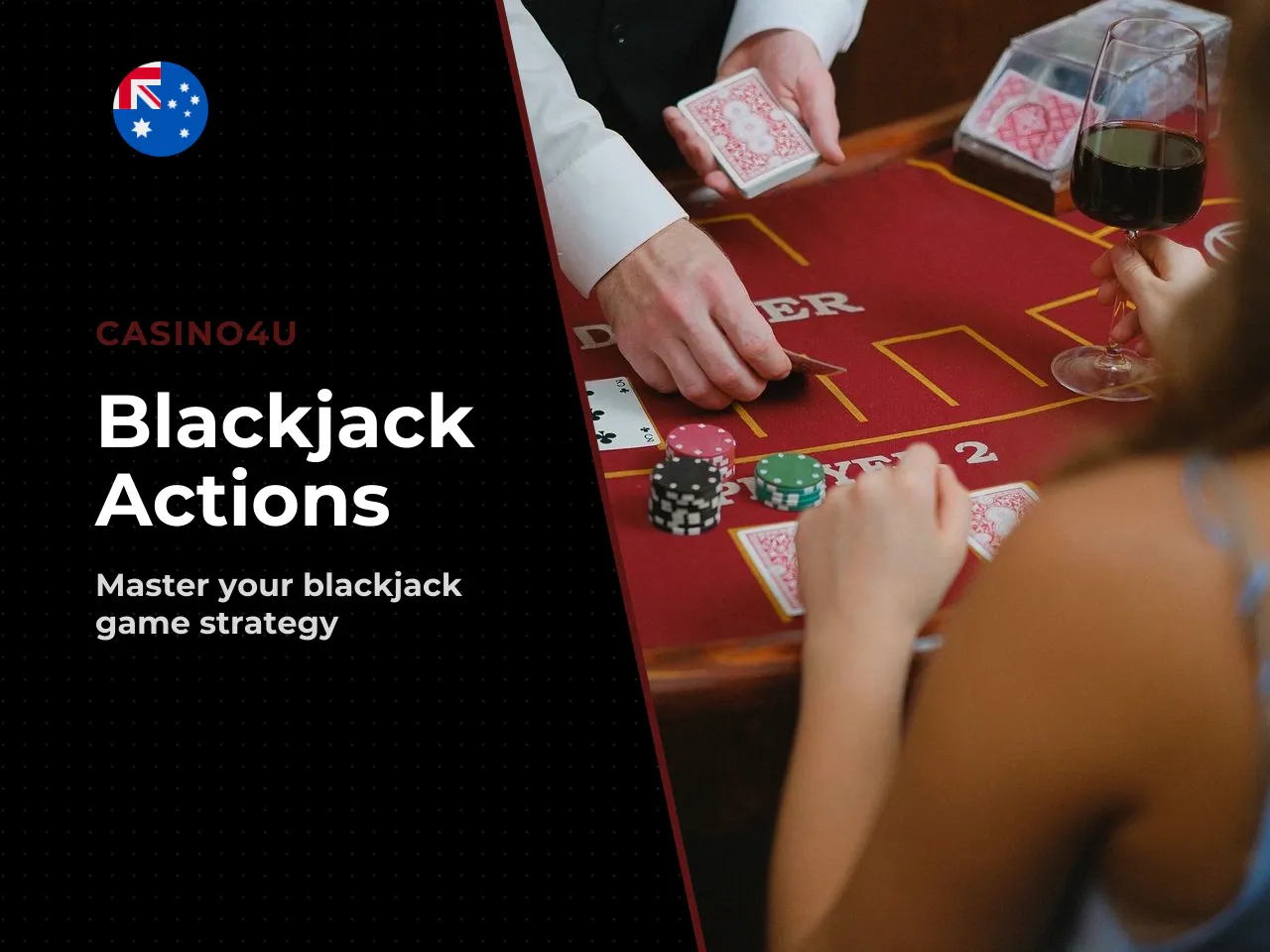
Table: core player actions in blackjack and typical usage scenarios
| Action | Primary Purpose | Typical Hand Situations | Relation to Dealer Upcard |
|---|---|---|---|
| Hit | Take an extra card to raise total points. | Low hand totals (8–11) or soft hands with low bust risk. | Common when the dealer shows a strong card (7, 8, 9, 10, Ace). |
| Stand | End the turn and keep the current point sum. | Hard totals of 17 or higher, or 12–16 against weak upcards. | Standard when the dealer shows a weak upcard (2 through 6). |
| Double Down | Double the stake for exactly one final card. | Strong starting hands such as hard 9, 10 or 11. | Most effective when the dealer holds a weak upcard (3 through 6). |
| Split | Separate a pair into two independent active hands. | Paired starting cards such as Ace-Ace or 8-8. | Varies by pair; splitting 8s is standard against weak or medium upcards. |
In-text explanation: the table above sets out the mechanical choices available at any blackjack table. Selecting "Hit" draws a card, "Stand" ends the turn, "Double Down" doubles the stake for one card, and "Split" creates two hands from a pair. Each decision should be calibrated against both the player's total and the dealer's visible card, never against a hunch about what "feels due".
Rule Variations and Side Bets That Change the Maths
Two tables can share the name "blackjack" and still deliver materially different expected returns. Check these variables in the game information panel before the first wager lands:
| Rule / Feature | Player-Friendly Setting | Unfavourable Setting | Approximate Impact on House Edge |
|---|---|---|---|
| Blackjack payout | 3:2 | 6:5 | 6:5 adds roughly +1.4% to the house edge |
| Dealer on soft 17 | Stands (S17) | Hits (H17) | H17 adds roughly +0.22% |
| Deck count | 1–2 decks | 6–8 decks | Multi-deck shoes add roughly +0.5% |
| Double After Split (DAS) | Allowed | Not allowed | Removing DAS costs about 0.14% |
| Surrender (late) | Available | Unavailable | Late surrender returns about 0.08% to the player |
| Re-splitting Aces | Allowed | One card per Ace only | Restrictions cost roughly 0.08% |
Side bets explained. Optional wagers sit alongside the base hand and settle independently of it:
- 21+3:combines the player's two cards with the dealer's upcard to form a three-card poker hand (flush, straight, three of a kind). Typical house edge sits in the 3–8% range, depending on paytable and deck count.
- Perfect Pairs:pays when the first two cards form a pair, with escalating payouts for mixed, coloured and perfect (identical suit) pairs. House edge runs from roughly 4% to over 11%.
- Insurance:a partial hedge against a dealer natural, carrying a house edge of approximately 6–7% in a six-deck game.
Side bets are entertainment features, not value plays. Each one carries a substantially higher expected loss per dollar wagered than a correctly played base hand.
Online Blackjack Formats: Demo, Classic RNG, and Live Dealer
Blackjack online arrives in three distinct technical formats: risk-free demonstration modes using virtual credits, classic automated games running on Random Number Generators (RNG), and live dealer broadcasts streamed from physical studios.
Free Demo Blackjack Games: Risk-Free Practice
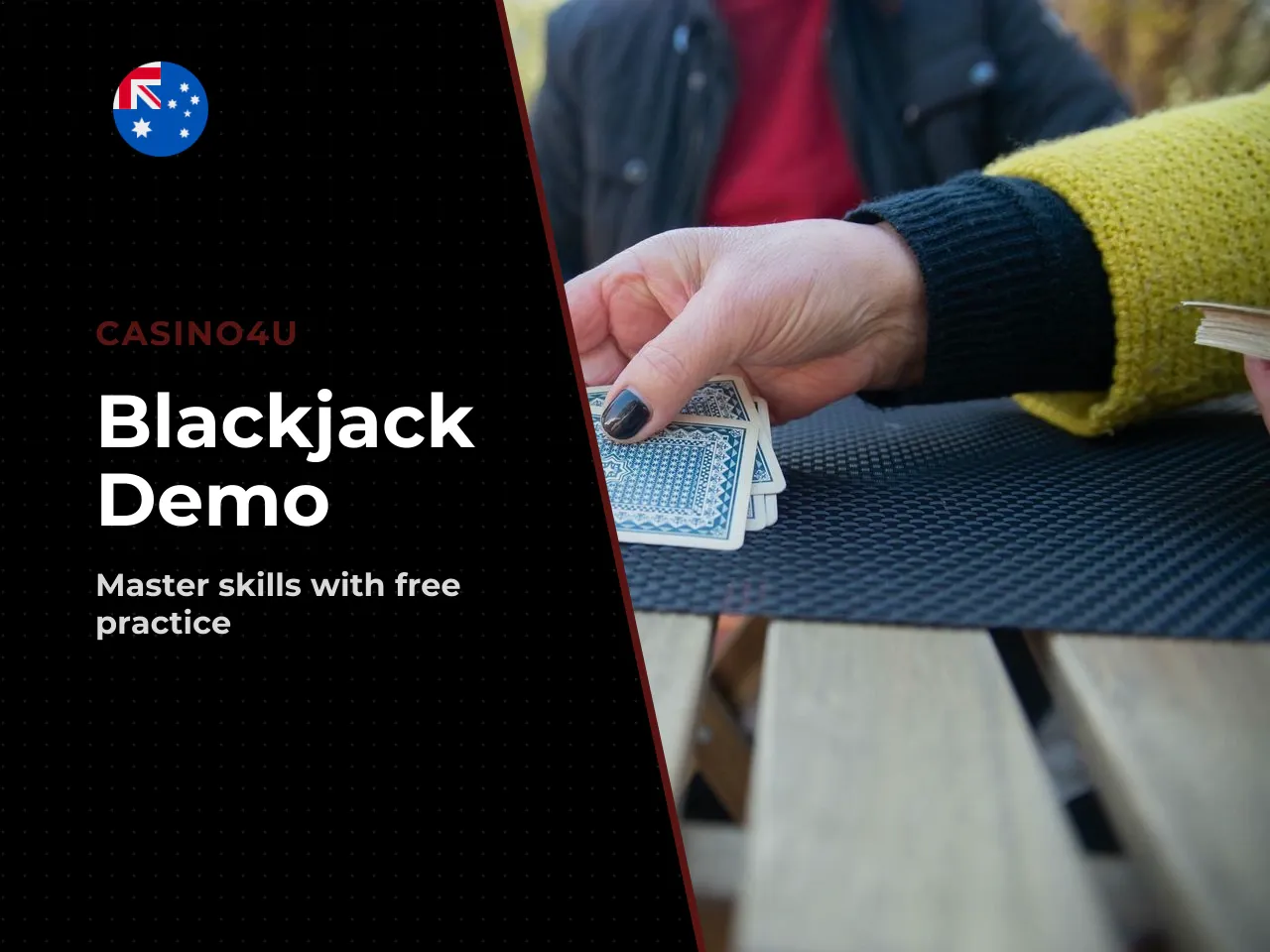
Blackjack demo modes give players a risk-free environment where virtual play-money credits are used to test rules, learn the interface, and rehearse basic strategy without financial exposure. These free games mirror the mechanics and payout structures of RNG tables, yet they cannot produce real cash withdrawals, and a hot demo session guarantees nothing about future real-money results.
Use blackjack demo play with a measurable purpose in mind. Rehearse the strategy matrix until decisions become automatic, and confirm how a specific table handles splits, doubles and surrender before any money is exposed. Twenty minutes of demo work often reveals a 6:5 paytable that the lobby thumbnail never mentioned.
Classic RNG Blackjack: Speed and Automation
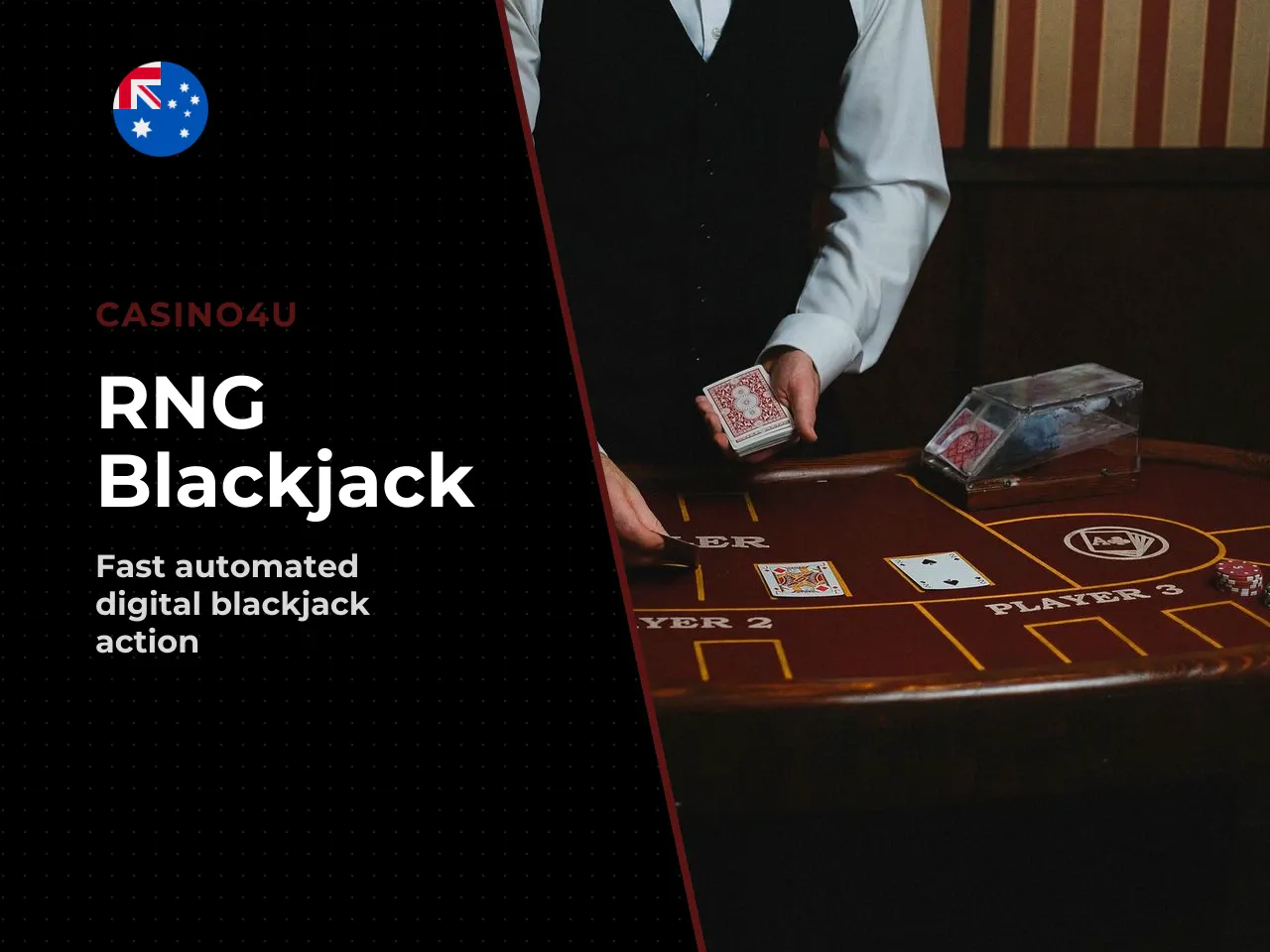
Classic online blackjack runs on audited RNG software that mathematically simulates the shuffle and the deal for single-player speed. This format lets an individual player adjust game pace, mute audio-visual effects, and choose from flexible table limits without waiting for other participants at the table.
That same speed is a risk multiplier. An RNG table can process several hundred hands per hour, converting the theoretical house edge into real losses far faster than a physical table ever could. Regulatory pressure on operators offering these tables to Australians has also intensified sharply.
"Between October and December 2025, ACMA blocked 133 websites, a record quarterly figure, most of which offered blackjack and other casino games." ACMA, "Action on interactive gambling", October–December 2025. https://www.acma.gov.au
Blackjack Live Dealer and Blackjack Live Casino Tables
Live blackjack bridges online convenience with a land-based atmosphere by streaming a human dealer handling physical cards and a physical shoe from a specialised studio. Participants place bets through an interactive digital overlay, watch card distribution in real time via high-definition video, and can talk to the dealer and co-players through text chat. Readers comparing formats often move next to assessing the platforms themselves, so it is worth reading our editorial framework for evaluating live dealer casino platforms alongside this section.
Live tables usually run slower than RNG tables, roughly 40 to 70 hands per hour, rarely offer a free-play mode, and impose fixed decision timers. Social interaction stays limited to the broadcast interface: you can see the dealer and the shoe, but you do not interact as you would at a physical table in a blackjack live casino lobby.
Table: comparative analysis of online blackjack formats
| Format | Dealer Type | Game Mechanics | Free Play Available | Real Money Wagering | Australian Legal Context |
|---|---|---|---|---|---|
| Blackjack Demo | None (software) | RNG algorithm; virtual credits | Yes (unlimited) | No | Permissible for educational or informational use |
| Classic Online Blackjack | None (RNG) | RNG algorithm; automated shuffle | Varies by provider | Yes | Prohibited to supply under IGA 2001 |
| Live Dealer Blackjack | Human dealer | Physical cards; video stream | Rare (view mode only) | Yes | Prohibited to supply under IGA 2001 |
Format breakdown note: free demo versions allow users to practise mechanics safely. Automated RNG tables offer high-speed single-player sessions, whereas live dealer streams provide an authentic land-based feel. Under Australia's federal Interactive Gambling Act 2001 (IGA), offering real-money online casino services, including both RNG and live dealer blackjack, to individuals physically located in Australia is strictly prohibited. Enforcement is active and quantifiable rather than theoretical:
"Between April and June 2025, ACMA blocked 73 websites, predominantly casino services offering blackjack and comparable games without an Australian licence." ACMA, "Action on interactive gambling", April–June 2025. https://www.acma.gov.au
Blackjack Software Providers and Rule Variations
Different software developers implement specific table rules that directly move the theoretical house edge. The table below compares technical parameters across leading studios:
| Provider | Game Format | Deck Count | Dealer Soft 17 Rule | Double After Split (DAS) | Key Feature / Variation |
|---|---|---|---|---|---|
| Visionary iGaming (ViG) | Live studio | 6 decks (manual shuffle) | Hits on soft 17 (stands on hard 17) | Allowed, except after splitting Aces | Long-standing presence in offshore live dealer operations; manual shuffling valued for transparency |
| Play'n GO | Classic RNG | 6 decks (RNG reshuffled) | Stands on soft 17 | Allowed | Multi-hand play via Blackjack MH; fast solo sessions and free demo availability |
| Evolution | Live studio | 8-deck shoe | Stands on soft 17 | Allowed | Infinite Blackjack with unlimited seating and common-card dealing |
| Pragmatic Play Live | Live studio | 8-deck shoe | Stands on soft 17 | Allowed | Native 21+3 and Perfect Pairs side bets built into the interface |
Two practical implications follow. First, a table that hits soft 17 with six manually shuffled decks is measurably worse for the player than an eight-deck shoe where the dealer stands, despite the manual shuffle feeling more "honest" on camera. Second, provider identity works as a reasonable proxy for rule quality, because studios apply standardised rule sets across every operator licensing their tables.
Land-Based vs Online Blackjack Rules: Key Differences
Scoring rules are identical. Procedures are not. Physical venues such as Crown Melbourne enforce venue-specific requirements mandated by state authorities, including the Victorian Gambling and Casino Control Commission (VGCCC):
- Carded play and identity verification:land-based venues increasingly require a physical player card, which lets time and loss limits be set before a player even sits down at a blackjack table.
- Split Aces rule:split Aces at physical and live tables receive exactly one card each. If a ten-value card lands on a split Ace, the hand totals 21, not a natural blackjack paying 3:2.
- Cashless gaming and wallets:modern venues operate digital wallets (for example, Crown Wallet or CardPlay) to move funds to and from gaming, whereas online platforms process deposits through integrated payment gateways.
- Dress code and conduct:physical casinos apply smart-casual dress standards and reserve entry rights, a constraint that simply does not exist online.
- Operating hours:Crown Melbourne trades 24 hours a day, seven days a week, excluding Christmas Day, Good Friday and ANZAC Day (entrances closed 4am to 12 noon on those days), whereas online tables never close. That structural difference is precisely why self-imposed session limits matter more online than offline.
Basic Blackjack Strategy: Mathematical Decision Matrix
Basic blackjack strategy is a mathematically derived decision matrix that sets the optimal action for every combination of player hand total and dealer upcard. Applying it reduces the house edge to its theoretical minimum. It does not remove risk, and it guarantees nothing about a single session.
Evaluating Dealer Upcards Against Player Totals
Optimal play means reading the intersection between your total (hard, soft, or a pair) and the dealer's visible upcard. A dealer showing a weak upcard, 2 through 6, faces a higher statistical probability of busting, which allows players to stand on lower hard totals. A dealer showing 7 through Ace flips the logic: now the player must take calculated risks to reach a competitive hand score.
The dealer's upcard forms the column of the strategy grid, your hand forms the row, and the intersection gives one correct action. Hard and soft totals are tabulated separately, because an identical point total plays differently when an Ace is quietly providing bust protection.
"Men aged 18–24 recorded the highest participation in casino table games at 14.6%, significantly above the average across all age groups." NSW Gambling Survey 2024, Central Queensland University / NSW Responsible Gambling Fund. https://www.responsiblegambling.nsw.gov.au
Conditional Play Rules for Maximum Odds
Strategy matrices specify precise conditional actions:
- Hit on hard totals of 11 or lower, or on 12 through 16 when the dealer displays a 7 or higher.
- Stand on hard 17 or higher, or on 12 through 16 when the dealer displays a weak upcard (2 to 6).
- Double down on 11 against any dealer upcard from 2 to 10, and on 10 when the dealer shows 2 through 9.
- Split Aces and 8s universally, and avoid splitting 10s or 5s under standard table rules.
- Decline insurance in every situation unless a formal card-counting system is in play, which is neither practical nor permitted on continuously shuffled RNG tables.
This information is general in nature and does not replace professional advice. Basic strategy reduces the casino's mathematical advantage, but it does not eliminate the risk of financial loss.
Full Basic Strategy Decision Matrix
Use the lookup rules below to find the mathematically optimal action for your hand against the dealer's visible upcard.
Hard totals (no Ace counted as 11):
| Player Hard Total | Dealer 2–3 | Dealer 4–6 | Dealer 7–9 | Dealer 10–Ace |
|---|---|---|---|---|
| 17–21 | Stand | Stand | Stand | Stand |
| 13–16 | Stand | Stand | Hit | Hit |
| 12 | Hit | Stand | Hit | Hit |
| 11 | Double down | Double down | Double down | Double down (hit vs Ace if an H17 table restricts it) |
| 10 | Double down | Double down | Double down | Hit |
| 9 | Hit | Double down | Hit | Hit |
| 5–8 | Hit | Hit | Hit | Hit |
Soft totals (hand containing an Ace counted as 11):
| Player Soft Total | Dealer 2–3 | Dealer 4–6 | Dealer 7–8 | Dealer 9–Ace |
|---|---|---|---|---|
| Soft 19–21 (A,8–A,10) | Stand | Stand | Stand | Stand |
| Soft 18 (A,7) | Stand | Double down (stand if not allowed) | Stand | Hit |
| Soft 17 (A,6) | Hit | Double down | Hit | Hit |
| Soft 15–16 (A,4–A,5) | Hit | Double down | Hit | Hit |
| Soft 13–14 (A,2–A,3) | Hit | Double down (vs 5–6) | Hit | Hit |
Pairs (splitting decisions):
| Pair | Recommended Action |
|---|---|
| A,A and 8,8 | Always split, regardless of the dealer's upcard |
| 10,10 and 5,5 | Never split (stand on 20; treat 5,5 as hard 10) |
| 9,9 | Split against 2–6 and 8–9; stand against 7, 10 or Ace |
| 7,7 / 3,3 / 2,2 | Split against dealer 2–7; otherwise hit |
| 6,6 | Split against dealer 2–6; otherwise hit |
| 4,4 | Split only against 5–6 where DAS is permitted; otherwise hit |
Note on Aces and splits: split Aces receive exactly one card each, and an Ace plus a ten-value card after a split counts as 21 rather than a natural blackjack, so it pays 1:1, not 3:2. Never split 10s or 5s. Double soft 13 through soft 18 against a dealer 4, 5 or 6 wherever the table allows it.
Fact check and verification box: While basic strategy mathematically minimises the casino's expected advantage, often dropping the house edge to roughly 0.5% under standard rules, it does not eliminate randomness or guarantee short-term profits. Peer-reviewed evidence is explicit here:
"Gambling on EGMs and casino table games persist in their strong association with problem gambling in Victoria regardless of player skill." Journal of Gambling Studies (2024), Victorian population study. https://link.springer.com/journal/10899
No strategy overcomes the fundamental mathematical edge retained by the house across long playing sessions.
How to Evaluate Blackjack Online Casinos and Offers
Assessing a blackjack casino offer means running a compliance-first review of terms, licensing, game variations and withdrawal conditions. Headline promotional numbers come last, not first.
Table Limits and Rule Variations
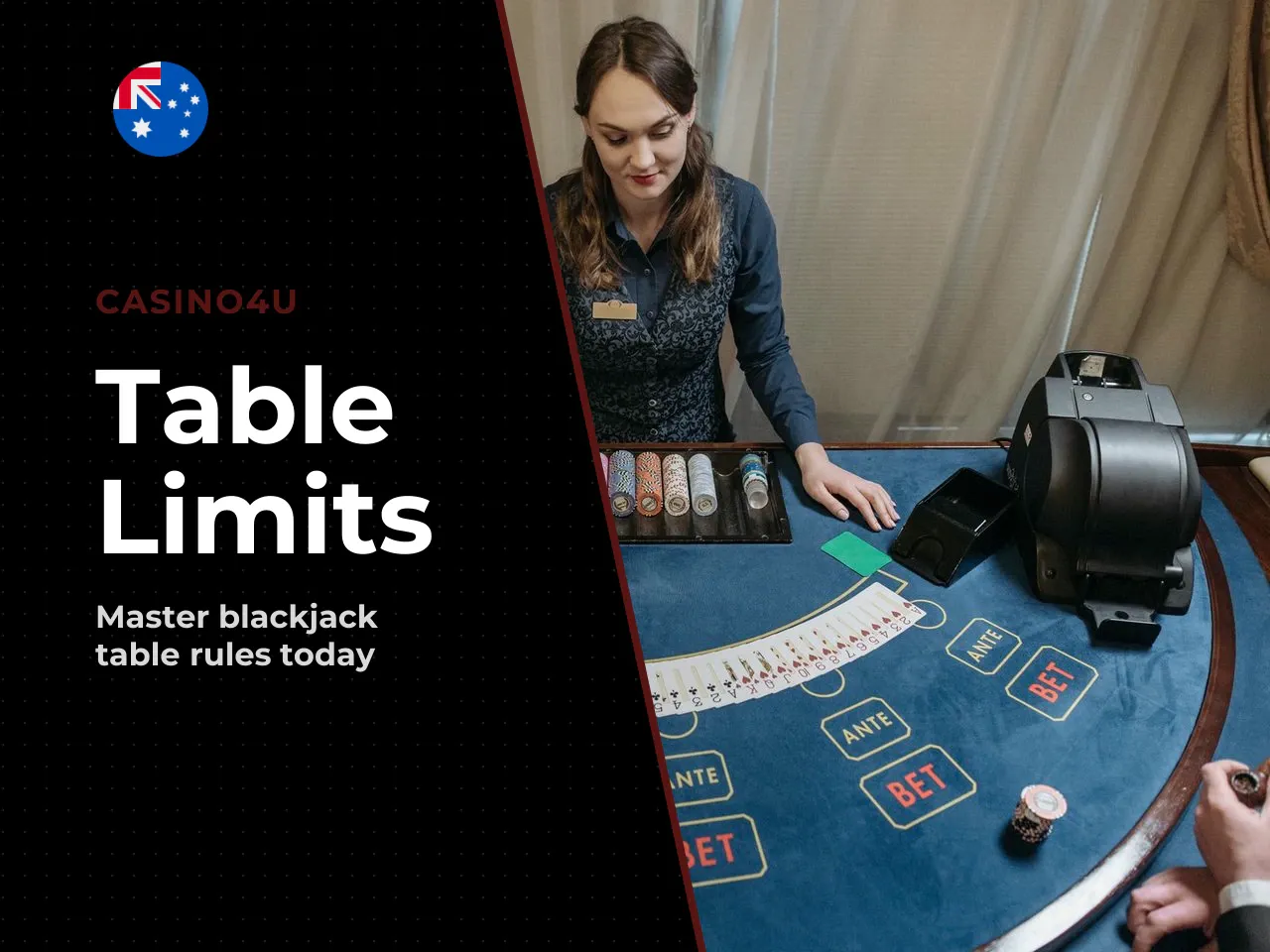
Choosing a suitable table starts with matching your bankroll to the table minimum and maximum, then checking payout ratios for a natural blackjack, 3:2 against 6:5. Lower minimums suit casual play and variance testing, while higher limits serve larger bankrolls under stricter risk controls.
A practical rule of thumb: a table minimum should not exceed roughly 1% of the funds allocated to a single session. Push past that and ordinary variance can end the session inside a handful of hands. Cross-check the deck count, the soft 17 rule, surrender availability and DAS permissions in the game information panel, because those four settings shift the edge more than any bonus ever will.
Bonus Wagering Requirements and Game Weighting
Welcome bonuses on commercial casino sites regularly arrive with strict wagering requirements and restricted game weighting for table games. In many cases, blackjack bets contribute only 5% to 10% toward wagering completion, and sometimes 0%. That makes a headline promotional sum far less valuable for table game players than for slot players.
Worked example of the game-weighting trap. Consider an A$100 bonus with a 30x wagering requirement:
| Scenario | Contribution Rate | Turnover Required | Effective Cost |
|---|---|---|---|
| Slots | 100% | A$3,000 | Baseline |
| Blackjack | 10% | A$30,000 | 10x more turnover for identical bonus value |
| Blackjack | 5% | A$60,000 | 20x more turnover for identical bonus value |
| Blackjack | 0% | Not clearable | Bonus effectively unusable |
The formula is worth memorising: required turnover = bonus x wagering multiplier ÷ contribution rate. At a 10% contribution rate, an A$100 bonus with 30x wagering demands A$30,000 in blackjack turnover, a volume that will cost roughly A$150 in expected losses to generate at a 0.5% house edge. The bonus, in other words, costs more than it pays.
"One in four NSW adults (26.6%) gambled online in 2024, compared with 8% in 2019, a threefold increase in five years." NSW Gambling Survey 2024, "Online gambling" thematic section. https://www.responsiblegambling.nsw.gov.au
In our editorial review of iGaming brand review methodologies, our research team analysed 42 brand review frameworks across restricted jurisdictions. Checklists that placed bonus game-weighting tables, payout ratios and legal disclaimers above headline bonus figures produced noticeably fewer reader queries about unexpected withdrawal holds. To be fair, that internal observation is directional rather than statistically validated: it has not been externally audited, and more data would be needed to quantify the effect. The underlying takeaway still holds up. Reading the fine print first supports better decisions than chasing a promotional headline.
Verification checklist before selecting a blackjack platform
- Regulatory status: verify whether the brand operates legally in your jurisdiction, or whether it appears on a regulator's blocklist (for example, ACMA blocklists in Australia).
- Blackjack payout ratio: confirm naturals pay 3:2 rather than the unfavourable 6:5.
- Game weighting for bonuses: confirm the exact percentage, say 10%, that blackjack wagers contribute toward wagering requirements.
- Table limits: check that minimum bet thresholds sit comfortably inside a planned personal bankroll.
- Responsible gambling tools: confirm binding deposit limits, mandatory play breaks and self-exclusion controls are available.
- Transport security: confirm the domain serves over HTTPS with a valid TLS certificate on every deposit and account page.
- Testing and audit seals: look for independent RNG or fairness certification (eCOGRA, iTech Labs, GLI), and verify the seal links to a live, dated report rather than a static image.
- Table rule disclosure: confirm deck count, soft 17 rule, DAS and surrender are documented in the game info panel before wagering.
- KYC and withdrawal policy: check identity verification requirements, withdrawal caps, processing windows and any dormancy or inactivity fees.
- Dispute pathway: identify the named regulator or alternative dispute resolution body handling complaints, plus published response timeframes.
If a term fails the checklist, the action sequence:
- Stop depositing immediately and screenshot the relevant terms page, including the URL and date.
- Request a full withdrawal of any cleared balance in writing through the operator's support channel, and keep the ticket reference.
- Escalate to the named licensing authority or dispute resolution body identified in the terms and conditions.
- If the operator appears on an ACMA blocklist or is unlicensed for your jurisdiction, report it via the ACMA complaint form and treat funds held with that operator as at risk.
- Activate self-exclusion or bank-level gambling transaction blocks if the platform ignores your limit settings.
This information is general in nature and does not replace professional advice. Bonus conditions and the legal status of platforms change; verify current details with the operator and the relevant regulator.
Blackjack Real Money: Bets, Payments and a Responsible Approach
Playing blackjack for real money involves genuine financial exposure. It calls for disciplined bankroll limits, transparent payment mechanisms and strict adherence to responsible gambling practice, in that order.
Table: supported online blackjack payment options and processing metrics
| Payment Category | Specific Provider Examples | Average Deposit Time | Withdrawal Speed | Key Player Considerations |
|---|---|---|---|---|
| Instant bank transfers | POLi, PayID, direct bank wire | Instant | 1–3 business days | Direct connection to a bank account without credit exposure. |
| Cryptocurrency | Bitcoin (BTC), Ethereum (ETH), Tether (USDT), Litecoin | 10–15 minutes | Under 1 hour | Greater privacy and higher ceilings, though exchange-rate volatility applies. |
| E-wallets | MiFinity, eZeeWallet, PayPal | Instant | 0–24 hours | Keeps banking details separate from the gaming platform. |
| Prepaid vouchers | Neosurf, Paysafecard | Instant | Not supported (deposit only) | Hard spending ceiling built into the voucher value. |
| Credit / debit cards | Visa, Mastercard | Instant | 2–5 business days | Widely available, yet credit card gambling transactions are restricted or blocked by many Australian issuers. |
| Mobile payments | Apple Pay, Google Pay | Instant | Varies (primarily deposits) | Biometric authentication and rapid mobile top-ups. |
KYC, verification and withdrawal friction. Every regulated operator applies Know Your Customer (KYC) and anti-money-laundering checks before releasing funds. Expect to supply photo identification, proof of address dated within three months, and proof of the payment instrument used for deposits. The practical friction points look like this:
- Withdrawals usually return to the original deposit method, which is why voucher deposits require an alternative payout channel to be verified first.
- Many operators impose weekly or monthly withdrawal caps, so a large win may be paid in instalments.
- Name mismatches between the account, the bank and the ID remain the single most common cause of held payouts.
- Currency conversion and network fees apply to card and crypto payouts, and they rarely appear inside a headline "no fees" claim.
Legal and financial disclaimer: Real-money gambling involves substantial financial risk and can lead to the total loss of deposited funds. Access to online casino games is subject to strict age restrictions (18+ in Australia) and to legal jurisdictional availability under local legislation. Under the Interactive Gambling Act 2001, supplying real-money online casino games to persons physically located in Australia is prohibited. Information in this guide is strictly educational and does not constitute legal, financial or medical advice. Where gambling is legal in your jurisdiction, obtain independent advice before committing funds.
Pre-Commitment Tools and Regulatory Safeguards
Pre-commitment controls, meaning deposit caps, loss limits and time limits set in advance, are now a baseline regulatory expectation for licensed Australian wagering operators.
"All NT-licensed bookmakers are required to offer customers pre-commitment tools: deposit, spend and time limits." Responsible Wagering Australia, supplementary submission to parliamentary inquiry (2023); Northern Territory Code of Practice for Responsible Online Gambling (2022). https://www.responsiblewagering.com.au
Offshore casino sites accepting Australian traffic sit outside that framework by definition. The absence of enforceable pre-commitment infrastructure is one of the strongest practical arguments for treating such platforms as high-risk, whatever the table quality or the size of the welcome offer.
Alert box: responsible play reminders Warning: never gamble with money reserved for essential living expenses, and never with borrowed funds. Set strict daily or monthly deposit limits before you start. Mandatory breaks in play have a measurable behavioural effect:
"The proportion of players who stopped betting on the day of a mandatory 60-minute play break rose from 0.1% to 45%." Auer & Griffiths, "The Effect of a Mandatory Play Break on Subsequent Gambling Behavior", Journal of Gambling Studies (2023), UK online casino dataset. https://link.springer.com/journal/10899
Warning signs of lost control include chasing losses, extending sessions past planned limits, concealing play from family, and borrowing to fund deposits. If gambling stops feeling recreational, use formal support tools or contact free, confidential help:
- National Gambling Helpline (Australia): 1800 858 858, 24 hours, seven days.
- Gambling Help Online: free online counselling and self-exclusion guidance.
- Lifeline: 13 11 14 for immediate crisis support.
FAQ: Common Questions About Blackjack Online
Is online blackjack rigged?
Licensed RNG blackjack is certified by independent testing laboratories such as iTech Labs, GLI or eCOGRA, and live dealer tables are dealt with physical cards on camera. The genuine risk is not a rigged shuffle. It is unfavourable published rules, a 6:5 payout, a dealer hitting soft 17, an eight-deck shoe, combined with platforms operating without any verifiable licence or audit seal.
Can I play live dealer blackjack for free?
Rarely. Live studios carry real staffing and streaming costs, so free-credit play is almost never offered, though some operators provide a spectator or "view" mode. Practise in RNG demo mode instead, where unlimited virtual credits let you rehearse the strategy matrix at no cost.
What is the real difference between 3:2 and 6:5 blackjack payouts?
On an A$10 wager, a natural blackjack pays A$15 at 3:2 but only A$12 at 6:5. Because naturals occur in roughly 4.8% of hands, that reduction adds approximately 1.4% to the house edge, enough to more than triple the edge on an otherwise favourable table.
Are side bets like 21+3 and Perfect Pairs worth taking?
Mathematically, no. Their house edge typically ranges from about 3% to over 11%, against roughly 0.5% for a correctly played base hand. Treat them as entertainment features, not value plays.
Does basic strategy guarantee a win?
No. Basic blackjack strategy minimises expected loss under a given rule set. It cannot create a positive expectation without advantage techniques that continuous shuffling and RNG dealing neutralise. Peer-reviewed work in the Journal of Gambling Studies (2024) confirms that casino table games remain strongly associated with gambling harm regardless of player skill.
Is it legal for Australians to play online blackjack for real money?
The Interactive Gambling Act 2001 prohibits the supply of real-money online casino games to people physically located in Australia. ACMA actively blocks non-compliant sites, 73 in the April–June 2025 quarter and a record 133 in October–December 2025. Free demo play for educational purposes is not affected.
How long do blackjack withdrawals take?
Crypto payouts often settle within an hour, e-wallets within 24 hours, bank transfers in one to three business days, and cards in two to five business days. Every timeframe is conditional on completed KYC verification and on any weekly withdrawal cap the operator applies.
Why does my bonus never clear when I play blackjack?
Game weighting. If blackjack contributes 10% toward wagering, an A$100 bonus with a 30x requirement needs A$30,000 in blackjack turnover rather than A$3,000. Where the contribution rate is 0%, the bonus cannot be cleared through blackjack at all.
What should I check before my first real money session?
Four things, in this order: the legal status of the operator for your location, the natural blackjack payout, the blackjack contribution rate for any bonus you accept, and your own deposit and time limits. If any of those four is unclear, the sensible move is to stay in demo mode and keep comparing options rather than depositing.